


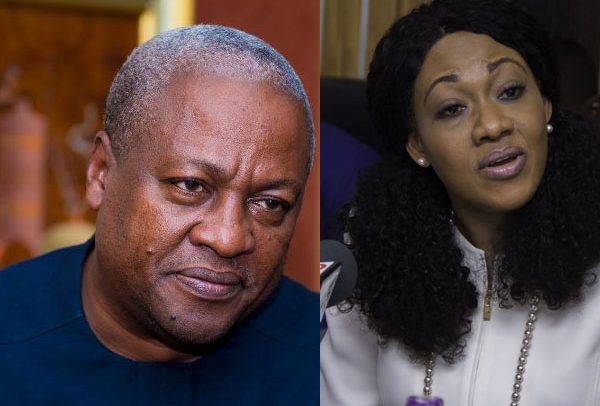
A fresh wave of constitutional drama has engulfed Ghana’s governance landscape as President John Dramani Mahama refers ten petitions to Chief Justice Paul Baffoe-Bonnie, with seven targeting the Electoral Commission (EC) leadership and three aimed at the Special Prosecutor (SP).
The move has activated the strict constitutional machinery laid out in Article 70 and Article 146 of the 1992 Constitution, placing both institutions under intense national scrutiny.
Pressure on the Special Prosecutor has surged, following a public protest in Accra led by Apostle Abraham Lincoln Larbi and lawyer Martin Kpebu.
The demonstrators insisted that Kissi Agyebeng had failed to deliver on his anti-corruption mandate and called on the President to either remove him or dissolve the Office of the Special Prosecutor altogether.
The EC leadership faces an equally heated moment. The petitions arrived against the backdrop of earlier statements from senior National Democratic Congress (NDC) figures hinting at an intention to remove Jean Mensa.

According to Ghanaweb report, in 2023, then-opposition leader, John Dramani Mahama, accused the government of appointing known NPP sympathisers to the EC.
He argued that such appointments compromised the Commission’s neutrality and even claimed that recruitment of returning officers ahead of the 2024 polls was biased in favour of the ruling party.
President Mahama’s concerns led him to call for amendments to Article 43(2) of the Constitution, which currently empowers the President, acting on the advice of the Council of State to appoint EC Commissioners. He proposed that parliamentary approval should instead be required to ensure transparency and neutrality.
But the constitutional protections around EC Commissioners make their removal a highly delicate process.
Under Article 70(2), the President appoints the EC Chairperson, Deputy Chairpersons and other members upon advice from the Council of State.
Once appointed, however, their security of tenure is shielded by conditions of service equivalent to Superior Court judges.

The EC Chairperson enjoys terms comparable to a Justice of the Court of Appeal, while the two deputies share those of High Court Justices.
This linkage means that any attempt to remove them must follow Article 146, one of the most rigid removal procedures in the Constitution.
Article 146 stipulates that such officeholders can only be removed for stated misbehaviour, incompetence, or inability to perform duties due to infirmity of body or mind.
Crucially, Article 146(3) obliges the President, upon receiving a petition, to refer it to the Chief Justice who alone must determine whether a prima facie case exists before any further action can proceed.
By forwarding the petitions, President Mahama has simply triggered this mandatory first step. He has not pronounced guilt or ordered any removals.

The next move now lies entirely with the Chief Justice, whose decision on whether a prima facie case exists will determine whether full-scale removal proceedings are activated.
Even at this preliminary stage, the stakes are unmistakable. The EC sits at the heart of Ghana’s electoral credibility, while the OSP represents the country’s anti-corruption resolve.
The simultaneous targeting of both institutions each insulated by constitutional safeguards has ignited debate over political motives versus procedural duty.
What happens next will depend not on political rhetoric, but on the Constitution’s unforgiving requirements, as the nation awaits the Chief Justice’s ruling on whether these petitions will advance to formal inquiries or fade at the prima facie stage.
For more news, join The Chronicle Newspaper channel on WhatsApp: https://whatsapp.com/channel/0029VbBSs55E50UqNPvSOm2z
The post EC Bosses, SP’s Days In Office Numbered? … As President Mahama Forwards Petitions For Their Removal To CJ appeared first on The Ghanaian Chronicle.
Read Full Story





Facebook
Twitter
Pinterest
Instagram
Google+
YouTube
LinkedIn
RSS