
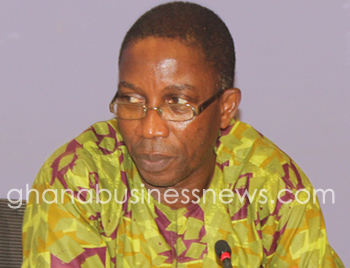

Dr. Yao Graham, Coordinator of the Third World Network-Africa, has called on African countries to adopt a regional approach in harnessing critical minerals such as lithium, manganese, and bauxite to accelerate the continent’s energy transition and industrialization.
Speaking at a high-level conference on Africa’s critical minerals strategy, Dr. Graham emphasized that while individual nations were developing their own policies, a fragmented approach weakened Africa’s negotiating power and limited its ability to benefit fully from global demand for green energy resources.
“Lithium is essential for battery production, manganese and bauxite are key for electrification. These minerals are central to the global energy transition, and Africa holds significant reserves,” he said.
“However, Ghana’s mineral policy is not sophisticated enough. Discussions are narrowly focused on royalties, while other countries link critical minerals to industrialization and energy strategies.”
The conference brought together stakeholders from African civil society, policy institutions, private sector actors, and international partners, including representatives from Europe, Indonesia, and organizations such as UNCTAD.
The aim was to share experiences and develop a framework aligned with the African Mining Vision and the African Green Mineral Strategy.
He warned that Ghana and other African nations risked missing out on opportunities if they failed to move beyond narrow national strategies.
He said Africa’s tendency to compete internally for investment allowed external actors to exploit divisions.
“Cooperation strengthens our hand. We need common frameworks, similar to Europe, to manage trade and investment relations and to ensure our minerals benefit Africa’s development rather than fueling other regions’ energy transitions,” he noted.
“A country like Ghana cannot have a national strategy alone. We need to be looking at regional approaches. Nigeria is producing lithium, Ghana is producing lithium—are we all going to set up individual plants? Cooperation strengthens our hand in attracting investment,” he stated.
Dr. Graham also highlighted the need for Africa to learn from global best practices. “Europe has a common framework for dealing with the world. Africa has common interests too. We have the African Mining Vision and the African Green Mineral Strategy, but we need to operationalize them,” he said.
On the urgency of the energy transition, he stressed: “Africa is the continent worst impacted by climate change. We cannot have a chauvinist attitude. The phasing out of fossil fuels is in our interest. The operative word is transition—nobody is asking us to jump overnight, but we must plan our transition.”
He cautioned against complacency, noting that climate change is already affecting livelihoods across the continent. “Climate change is real, and it’s impacting us every day. It is not a choice. We need to get a move on,” he said.
Dr. Graham urged civil society to push for policies that prioritize value addition and regional integration.
“We have mineral endowments which can help with the energy transition. We should act quickly so that we are benefiting from the use of those minerals, rather than our minerals benefiting other people’s energy transition while we remain dependent on exporting raw materials,” he said.
“Africa must act quickly so that our mineral wealth supports our own industrialization and energy needs, rather than remaining raw material exporters,” he concluded.
According to the organisers, the first part of the meeting, scheduled for December 1-3, will focus on strategic questions and policy options for Africa’s energy transition and critical minerals sector.
It will produce proposals for action through research, policy dialogue, advocacy and community mobilisation.
The second part, on December 3-4, will involve 15 key civil society organisations to establish a core working group to advance the consultation’s conclusions and promote a shared framework on critical minerals and Africa’s economic transformation.
The event comes in the wake of the adoption of the African Green Minerals Strategy (AGMS) by African governments earlier this year.
The AGMS, developed under the auspices of the African Union, provides a roadmap for harnessing Africa’s vast reserves of green minerals—such as lithium, cobalt, nickel and rare earth elements—to drive sustainable industrialisation, energy security and inclusive growth.
It seeks to move the continent beyond raw mineral exports by promoting local beneficiation, integrated value chains, job creation and economic diversification.
The strategy is anchored on four pillars: advancing mineral development, building technological capabilities, developing key value chains, and promoting responsible mineral stewardship for environmental sustainability.
Topics to be discussed include: “Energy Transition and Critical Minerals: Evolution of Ideas and Initiatives,” “Africa’s Prospects with Critical Minerals,” and “Bilateral Agreements and Africa’s Future: EU, China, US.”
Speakers will include representatives from UNCTAD, UNU-INRA, the African Union, AfDB, academics and civil society leaders.
Source: GNA
The post Africa urged to adopt regional approach to critical minerals for energy transition appeared first on Ghana Business News.
Read Full Story






Facebook
Twitter
Pinterest
Instagram
Google+
YouTube
LinkedIn
RSS