


According to him, after taking over from the ex-President John Mahama’s administration on January 7, 2017, the current administration had been working assiduously to restore macroeconomic stability.
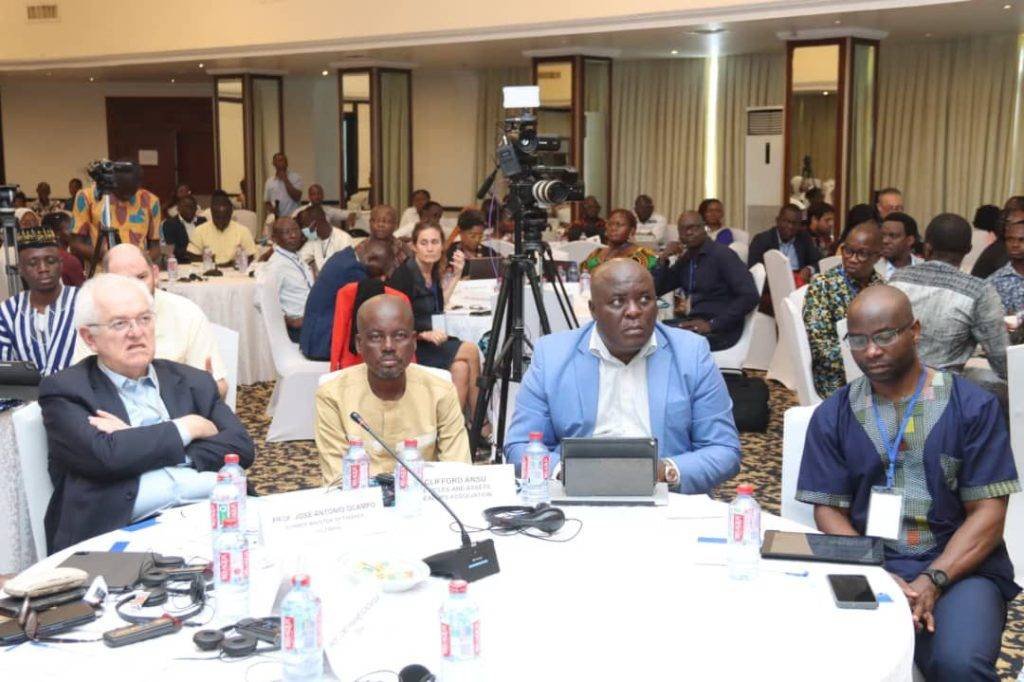
Dr. Bawumia made this known in his ongoing presentation at the Ministry of Information’s 2019 Townhall Meeting with the Economic Management Team (EMT) of Government.
He recounted that during the Mahama’s administration, Ghana witnessed a double digit fiscal deficit in three consecutive years which created a “deep fiscal hole.”
Recounting the economic conditions that existed forcing Ghana to return to the International Monetary Fund (IMF) in August 2014, he said “the debt pile up begin, debt service became burdensome on the budget, inflation soared and external trade balances worsened and the economy became more and more vulnerable to external shocks.”
He said “this poor state of public finances, weak implementation and lack of policy credibility, resulted in Ghana requesting an IMF bailout in August 2014.”
According to the Vice President, “since there was no meat on the bone to fill the deep hole in public finances, government resulted to some tough fiscal measures, notably the increase in the tax burden on every conceivable consumer item and production activity.”
In addition to hiring freezes, there were cuts to a number of areas of spending including research, teachers, nurses allowances, he said.
By the end of 2016, the fundamentals of the economy were generally weak; real GDP growth declined from 9.1 percent in 2008 to 3.4 percent in 2016; growth in agriculture was declining, growth in industry was declining, he stated.
According to the Vice President, the public debt which stood at 32 percent to GDP in 2008 had reached 70.2 of gdp in 2016 and at that Ghana had been classified as a country at high risk of debt distress and we are still trying to get ourselves out of this classification.
Read Full Story








Facebook
Twitter
Pinterest
Instagram
Google+
YouTube
LinkedIn
RSS