


The Volta Trade and Investment Fair (VTIF) 2025 – AI and Agriculture Forum in Ho -has brought together experts to explore the potential of Artificial Intelligence (AI) in transforming small-scale farming.
The forum emphasised the importance of leveraging AI to address challenges facing small-scale farmers in Volta Region and across Ghana, such as climate change, soil degradation, and limited access to markets, indicating that by harnessing AI, farmers could increase yields, reduce waste, and improve their livelihoods.
The event, a hybrid session, themed: “Harnessing AI for Small-Scale Farming; Croppredict and the Future of Agricultural Insight,” featured presentations including an overview of AI application in agriculture and, collaborative data collection strategies for AI-driven crop prediction in Ghana’s smallholder farming.
The speakers highlighted how AI could predict crop yields, and optimise resource use, ultimately boosting productivity and profitability for farmers with others highlighting the need to clean data for the intelligence system, reminding of the popular saying, “garbage in, garbage out.”
Mr Sheriff Issaka, a Doctor of Philosophy candidate at the University of California, Los Angeles who gave a presentation on Croppredict: Agricultural Intelligence System: Transforming Fragmented Data into Intelligence, highlighted the fragmented and invisible nature of data in the region, as well as the country, hindering intelligence system development.
He mentioned the significant economic losses in Ghana (about two billion dollars annually) due to post-harvest issues, the high percentage (over 80 percent) of small-scale farmers and the challenge of aggregating information from small farms to support supply chain effectiveness, saying “you cannot manage what you cannot measure.”
Mr Sherrif proposed that the solution lied in the platform being developed called, “Croppredict,” emphasising its simplicity and user-friendliness and described its features to include data registration, crop data logging and alerts for weather and market changes.
“Data is very crucial; we all know that. But how do we take this data on the ground and transfer it into meaningful predictive data points, a meaningful predictive analysis that can be used by these farmers to make informed decisions?
“We do not just want to spend the time, effort, and energy to build these tools just for the sake of building. We want to see how they can be translated from data points into actionable dashboards, into actionable insights, into actionable tools and technologies that can be leveraged on the ground,” he aded.
Reverend Father Dr Paul A. Agbodza, Data Scientist in an interview with Ghana News Agency, highlighted the critical role of data quality in ensuring the AI system’ accuracy and reliability, saying, unclean data would lead to incorrect information and compromised AI system performance.
“They want to create an AI system for farmers to help farmers. Now, the data you put in before you create the system must be cleaned. So, that is why I spent a lot of time talking about what kind of data we need and why it is important to talk about it so that people present good data.”
The forum, moderated by Mr Fred Avornyo, Chief Executive Officer of VTIF, also had in attendance Mr William Dzamefe, Regional Director, Ministry of Food and Agriculture, Mr Mawuli K.E. Sevor, Deputy Principal, Ohawu Agriculture College, teachers and students from some second cycle institutions in Ho, among others.
From Ewoenam Kpodo, Ho
GNA
The post Volta Fair 2025: experts explore potential of AI in transforming small-scale farming appeared first on The Ghanaian Chronicle.
Read Full Story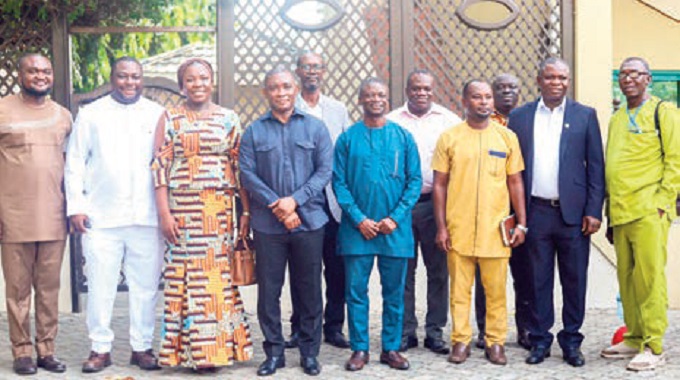




Facebook
Twitter
Pinterest
Instagram
Google+
YouTube
LinkedIn
RSS