


By Christabel DANSO ABEAM [email protected]
Two recent reports – funded by Norway’s development agency (NORAD) and produced by the International Union for Conservation of Nature (IUCN) and its World Commission on Environmental Law (WCEL) – have identified widespread plastic leakage across the Sakumono Lagoon and Densu Delta.
The assessments show that plastic waste is undermining ecosystem health, shoreline stability and public health, particularly in rapidly urbanising coastal and peri-urban communities.
Field assessments were conducted at nine sites across Greater Accra, Central and Western Regions. The research identified a common pattern of plastic pollution, with sachet-water packaging, plastic bags, expanded polystyrene food containers and lightweight plastic bottles among the most dominant waste materials recorded.
Komenda (Susu Lagoon area) and Shama are also areas experiencing significant plastic pollution challenges.
The findings also show that many plastic-polluted areas merge with important biodiversity locations including Ramsar wetlands and key biodiversity areas, raising concerns about long-term damage to sensitive ecosystems.
However, ecosystems such as Amanzuri, Akwidaa and Muni–Pomadze remain relatively healthy and have been identified as priority areas which requires protection to prevent further degradation.
Ghana currently generates an estimated 1.1 million tonnes of plastic waste annually, with only a small proportion recycled – leaving large volumes to enter drains, rivers, wetlands and coastal waters.
2022 scientific research on Ghana’s coastal lagoons recorded 16,899 litter items at the Sakumono Lagoon over a six-month period, with plastics accounting for the largest share of waste. Another study detected widespread microplastic contamination within the Densu River system with microplastics found in sediments and commercially important fish species, highlighting growing risks to aquatic biodiversity and food security.
The reports warned that plastic pollution has evolved beyond a waste management challenge into a broader environmental and development issue driven by weak enforcement, rapid urbanisation and inadequate coastal planning.
It also stated that continued plastic leakage threatens Ghana’s ambitions to build a sustainable blue economy, particularly the fisheries sector that depends on healthy lagoons, wetlands and coastal ecosystems for breeding and productivity.
Ghana is in the danger-zone
Reacting to the finding, Executive Director-Centre for Environmental Management and Sustainable Energy (CEMSE) Benjamin Nsiah said “Ghana is already in the danger-zone”.
He noted that the country has not made enough progress in addressing plastic waste due to challenges in policy implementation, regulation and public awareness.
Mr. Nsiah stressed that Ghana’s National Plastic Management Policy has faced implementation difficulties because of limited stakeholder engagement, inadequate resources and weak coordination – while pointing out inconsistencies in government’s approach to regulating plastic production and consumption.
According to the him, while taxes and levies have been introduced to discourage excessive plastic production, weak enforcement has allowed manufacturers and consumers to continue relying heavily on plastic products.
“There are inconsistencies in both fiscal and environmental policy directions. When these measures are not properly implemented, it becomes easier for plastics to continue entering the market,” he said.
Weak regulation affecting plastic management
He further noted that institutions responsible for managing plastic waste, including the Environmental Protection Agency (EPA) and District Assemblies, lack the resources needed to effectively enforce regulations.
Mr. Nsiah explained that many local authorities face challenges with funding, manpower, technology and infrastructure, affecting their ability to manage waste across the plastic value chain.
Plastic pollution affecting fisheries and flooding
He warned that the effects of plastic pollution are already being felt by fishing communities and disclosed that fishermen are increasingly encountering plastic waste during fishing activities, affecting catches and livelihoods.
On recent flooding in many urban and peri-urban areas, the Executive Director linked the disaster to drainage systems blocked by plastics.
Recycling efforts require more investment
According Mr. Nsiah, inadequate recycling infrastructure and limited investment are major barriers to improving plastic waste management.
“Ghana lacks enough large-scale recycling facilities capable of processing the amount of plastic waste generated. I urge government to strongly support recycling businesses through funding, incentives and policies that will encourage innovation.”
Way forward
To tackle plastic waste, Mr. Nsiah recommended increased investment in research and development of alternative packaging materials, improved waste segregation at household levels and stronger public education on the effects of plastic pollution.
He also called for consistent enforcement of plastic regulations and renewed discussions on restricting single-use plastics, which form a large part of waste found in drains, streets and water bodies.
He also disclosed CESME continues to engage parliament, plastic producers, media and other stakeholders through research and advocacy to promote sustainable plastic waste management.
According to him, it is undertaking a research project supported by Ocean Governance to examine marine litter and its impact on fishing communities, with findings expected to contribute in policy discussions and public awareness.
The post Plastic pollution reaches danger-zone appeared first on The Business & Financial Times.
Read Full Story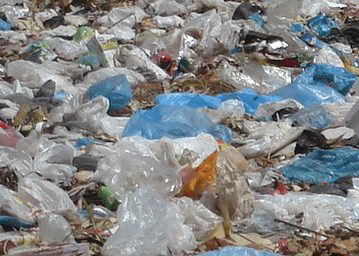



Facebook
Twitter
Pinterest
Instagram
Google+
YouTube
LinkedIn
RSS