
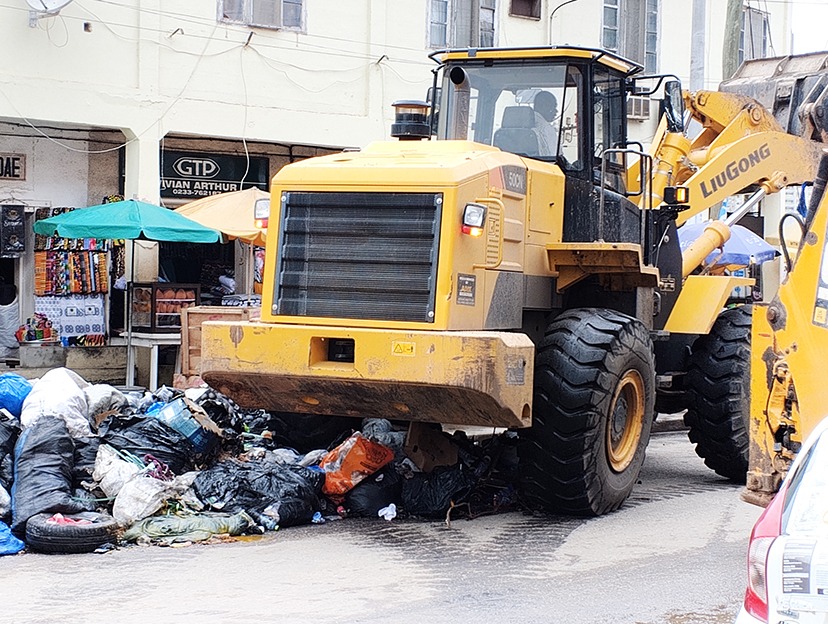

Five days after a nationwide sanitation exercise, heaps of refuse collected from streets and drains across Sekondi-Takoradi remain uncleared, triggering public anger and renewed criticism of the Sekondi-Takoradi Metropolitan Assembly (STMA) over its handling of waste management.
The lingering piles of waste, particularly around the Market Circle and other parts of the metropolis, have begun emitting foul odours, with many residents questioning why refuse collected during the exercise has been left on open streets instead of being transported to the Assembly’s engineered landfill site.
The situation has reignited concerns over sanitation in the metropolis, with critics describing the Assembly’s failure to evacuate the refuse as evidence of weak leadership in managing environmental sanitation. As at the time of filing this story on Tuesday in the hours of 11am, the waste were now being cleared by the STMA.
The criticism gained momentum after the Western Regional Director of the National Youth Authority (NYA), Hakim Mahama, took to social media to question the Assembly’s response following the clean-up exercise.
“The media in Sekondi must hold STMA accountable. How can you do a clean-up exercise and leave the waste on the streets for days? This lack of leadership in sanitation is ridiculous and an insult to residents,” he wrote.
Residents who spoke to this newspaper expressed frustration over the continued presence of the refuse, arguing that the purpose of the clean-up exercise has been undermined by the Assembly’s inability to remove the collected waste.
Some pointed out that while tricycle operators, popularly known as “aboboyaa,” continue to collect household refuse daily for a fee, waste gathered by the Assembly during the sanitation exercise remains abandoned in public spaces.

Environmental health experts warn that leaving refuse exposed for several days, particularly during the rainy season, poses significant public health and environmental risks.
Apart from producing offensive odours, decomposing waste attracts flies, rodents and other disease-carrying pests.
Rainwater can also wash the refuse into drains, undoing the gains made during the clean-up exercise by blocking waterways and increasing the risk of flooding. The accumulation of stagnant water around waste dumps further creates breeding grounds for mosquitoes, heightening the risk of malaria and other vector-borne diseases.
The uncleared refuse also diminishes the appearance of the city and raises concerns about the sustainability of periodic sanitation exercises if waste collected is not promptly evacuated.
The latest development comes amid heightened scrutiny of the Assembly’s sanitation record.
During a recent visit to the metropolis, Local Government Minister, Ahmed Bamba Ibrahim, publicly expressed dissatisfaction with the sanitation situation in Sekondi-Takoradi and directed the Assembly to take urgent steps to improve conditions. Western Regional Minister Joseph Nelson also voiced concern over the poor state of sanitation in the city.
Responding to the criticism at a press conference, STMA Mayor, Frederick Faidoo, defended his administration, arguing that the Assembly inherited serious logistical challenges, including inadequate waste collection equipment.
The Mayor maintained that the Assembly’s sanitation allocation—about GH¢1.9 million from the District Assemblies Common Fund—is insufficient, particularly because the Assembly also bears the cost of managing the Western Region’s only engineered landfill site.
He contended that the financial constraints and logistical difficulties, rather than a lack of commitment, account for the sanitation challenges confronting the metropolis.
However, the Assembly’s inability to evacuate refuse collected during last week’s sanitation exercise has intensified public debate over whether available resources are being deployed effectively and whether stronger leadership is needed to keep the metropolis clean.
For many residents, the measure of success is not merely organising clean-up exercises, but ensuring that the waste collected is removed promptly before it returns to the drains or becomes another environmental hazard.
As the rainy season intensifies, the pressure is mounting on the STMA to clear the refuse and demonstrate that the sanitation campaign extends beyond symbolic clean-up exercises to sustained waste management capable of protecting public health and preventing flooding.
For more news, join The Chronicle Newspaper channel on WhatsApp: https://whatsapp.com/channel/0029VbBSs55E50UqNPvSOm2z
The post Days After Clean-Up Exercise, Refuse Left On Sekondi Streets Sparks Public Outrage appeared first on The Ghanaian Chronicle.
Read Full Story



Facebook
Twitter
Pinterest
Instagram
Google+
YouTube
LinkedIn
RSS