


A report by Citi Newsroom reveals that the Ghana Education Service (GES) has secured approval from the Ministry of Finance to pay long-overdue salary arrears owed to teachers and other staff. The arrears, covering the period from August 2024 to November 2025, will be disbursed by the Controller and Accountant-General’s Department in four instalments between May and August 2026.
Each tranche will consist of four months’ worth of unpaid salaries. According to GES, this phased approach is intended to ensure accuracy and reduce pressure on the public payroll system. The development follows months of agitation by affected teachers, some of whom reportedly went up to 17 months without pay, sparking protests and appeals from teacher unions.
Delayed salaries for newly recruited teachers have become a recurring issue in Ghana’s education sector, often linked to administrative bottlenecks, delayed financial clearance and payroll inefficiencies. While the approval offers relief to thousands of affected staff, it also highlights persistent structural challenges in the management of public sector wages, particularly within the education system.
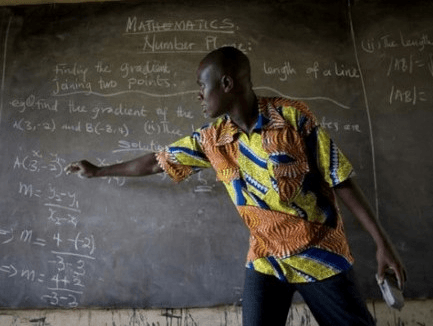
The decision by the Ministry of Finance to release salary arrears to teachers under the GES is being celebrated in some quarters. It should not be. This is not progress, it is a recurring failure dressed up as relief. For years, the issue of unpaid teacher salaries has resurfaced with disturbing regularity. Newly recruited teachers are posted to classrooms, made to work and then left in limbo for months, sometimes over a year without pay. The latest case, involving arrears stretching up to 17 months, is not an anomaly, it is a pattern.
At the heart of this crisis is a broken system. The delays are consistently blamed on “financial clearance,” payroll validation and administrative processes. But how long can a country continue to hide behind bureaucracy while its teachers suffer? The Controller and Accountant-General’s Department and related institutions must be held to higher standards.
The Country has attempted to streamline public sector pay through mechanisms like the Fair Wages and Salaries Commission and the Single Spine Salary Structure. Yet, labour unrest and salary disputes persist, suggesting that reforms have not addressed the root problem implementation failure and weak coordination.
Even more troubling is the human cost. Young teachers, many posted to deprived areas, are forced to survive without salaries, often relying on loans, family support or abandoning the profession altogether. This is not just an economic issue, it is a moral one. A nation that cannot pay its teachers on time cannot claim to prioritise education.
The Chronicle finds the sudden decision to pay particularly telling. It confirms what many already suspect, that government reacts only when pressure mounts. Protests, media attention and public outrage have become the unofficial triggers for action. That is unacceptable governance.
This cycle must end. First, financial clearance processes must be completed before recruitment, not after. Second, payroll systems must be digitised and synchronised across agencies to eliminate delays. Third, there must be accountability clear consequences for officials whose inefficiencies lead to unpaid salaries.
We cannot continue to normalise arrears. Paying teachers late is a failure. Until the system is fixed, today’s relief will only be tomorrow’s crisis.
For more news, join The Chronicle Newspaper channel on WhatsApp: https://whatsapp.com/channel/0029VbBSs55E50UqNPvSOm2z
The post Editorial: Let’s Prioritise Education By Paying Teachers On Time appeared first on The Ghanaian Chronicle.
Read Full Story






-1200x801.jpg)


.jpg)


Facebook
Twitter
Pinterest
Instagram
Google+
YouTube
LinkedIn
RSS