


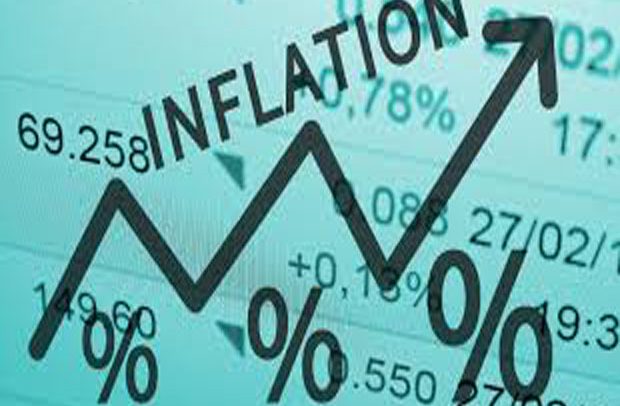
In Ghana today, a quiet but important economic shift is taking place. After a period of intense price increases, inflation has been declining.
According to available data, Ghana’s annual inflation averaged about 39-40% in 2023 and fell to roughly 20-23% in 2024. It continues to fall.
On paper, this is a significant improvement. Policymakers, economists, and international partners often interpret this trend as a sign that the economy is stabilising after years of turbulence driven by currency depreciation, global shocks, and domestic fiscal pressures.
Yet across markets, trotro stations, campuses and offices in Accra and beyond, the reaction is very different.
“Rice is more expensive than last year.”
“Transport fares haven’t come down.”
“Everything still feels costly.”
So what really happened? What explains this disconnect?
The answer lies in a simple but often misunderstood truth that lower inflation does not mean lower prices.
What inflation really measures.
Inflation measures how fast prices are increasing, not whether they are high or low.
It is calculated as the percentage change in the Consumer Price Index (CPI), which tracks the cost of a basket of goods and services such as food, transport, housing, and utilities.
When inflation is high, prices are rising quickly. When inflation falls, prices are still rising, but more slowly.
This distinction is important.
For example, JoyNews reported that Ghana’s inflation rate averaged 40.27% in 2023, the highest in over two decades.
Even though inflation dropped in 2024, it remained above 20%, meaning prices continued to rise significantly, just not as rapidly as before.
Rice Prices as A Real Ghanaian Example.
Consider a common household staple like imported rice. Many consumers in Accra have observed that a bag of rice that sold for around GHS 300–350 in 2022–2023 rose to GHS 450–500 or more by 2024–2025 (depending on brand and market location).
This is not inconsistent with falling inflation. Instead, it reflects how inflation works over time.
First, prices increased sharply during the high-inflation period.
Then, even after inflation slowed, prices continued rising, just at a reduced pace.
But still, the earlier increases remain “locked in.”
So when someone says, “inflation is falling,” and a trader responds, “but rice is still expensive,” both statements can be true.
Transport fares and daily costs.
Transport provides another clear example.
Between 2022 and 2023, Ghana experienced multiple fuel price adjustments linked to global oil prices and the depreciation of the cedi.
These increases led to repeated upward adjustments in public transport fares.
Even when inflation began to decline in 2024, transport fares largely remained elevated.
This is because fuel prices did not fall significantly enough to justify fare reductions.
And operators adjusted fares upward to cover past cost increases.
So costs such as spare parts that are often imported remained high.
For commuters, the lived reality is simple: we are still paying more than before.
The Power of “Accumulated Inflation”.
One of the most important concepts for understanding Ghana’s situation is cumulative inflation.
Inflation compounds over time. A period of high inflation permanently raises the general price level.
Back-to-back increases dramatically raise the cost of living.
Even if inflation falls, it does not undo those earlier increases. Prices continue from a much higher starting point.
This is why many households feel that “things are worse,” even when macroeconomic indicators show improvement.
Why food prices hit harder.
Another reason for the disconnect is that inflation is an average, but people experience specific prices.
In Ghana, food carries the largest weight in the inflation basket; it’s about 43% of the CPI.
This means that if food prices rise sharply, households feel it immediately.
Even if other prices stabilise, food inflation dominates daily experience.
Food prices are influenced by, exchange rate movements (many inputs are imported), transport costs, weather and agricultural output, and storage and distribution inefficiencies.
As a result, food inflation often feels higher than the headline inflation rate.
The Exchange Rate Effect.
A key driver of Ghana’s inflation in recent years has been the depreciation or appreciation of the Ghana Cedi.
When the cedi weakens, imported goods become more expensive, fuel costs rise, and production costs increase.
Businesses respond by raising prices.
Even when the cedi stabilises, as it has more recently, prices do not automatically fall. Businesses rarely reverse price increases unless costs decline significantly and consistently.
This explains why stabilisation does not immediately translate into relief at the market level.
Why lower inflation still matters.
If prices are still rising, why do economists emphasise falling inflation as a positive development?
Well, because stability matters!
High inflation creates uncertainty. Businesses struggle to plan. Investors hesitate. Households cannot predict future costs.
A declining inflation rate signals that price increases are coming under control, even as they’re still increasing. This creates a more predictable environment for economic activity.
In Ghana, the recent decline in inflation has been supported by tight monetary policy by the Bank of Ghana, fiscal adjustments under IMF-supported programmes, and the relative stabilisation of the exchange rate.
These measures are beginning to slow the pace of price increases, even if they have not yet reduced prices.
Why People Feel Left Behind.
Despite these improvements, many Ghanaians do not feel relief. This is not a misunderstanding because it reflects real economic pressures.
Three key factors explain this.
- Prices Rose Faster Than Incomes: Wages have not kept pace with inflation.
Many workers, especially in the informal sector, do not receive automatic wage adjustments. Even in the formal sector, salary increases often lag behind inflation.
This means purchasing power has declined.
- Essential Goods Are Still Expensive: Households spend most of their income on food, transport and rent.
If these remain expensive, overall well-being does not improve, regardless of what inflation data shows.
- Expectations vs Reality: People naturally interpret “lower inflation” as “things are getting cheaper.”
When this expectation is not met, it leads to frustration and distrust.
This is not a failure of the public sector. It is just a communication gap.
Communicating Inflation Better.
The challenge then is more than just economic. It is also communicative.
When presenting inflation data, clarity and empathy are essential.
Instead of saying, “Inflation is falling, so things are improving,” it is more accurate to say, “Prices are still rising, but not as fast as before.”
This small shift in language makes a big difference. But we can all understand how that does not make for a politically attractive soundbite.
If done that way, it would acknowledge reality while still conveying progress.
Bridging Data and Lived Experience.
When a trader says, “rice has gone from GHS 350 to GHS 500,” they are not rejecting economic data oo. They are describing their lived experience.
That experience is valid! It’s a fact, not an opinion.
At the same time, inflation data provides a broader picture of the economy.
Bridging the gap requires explaining concepts in simple terms, using real-life examples, and acknowledging people’s experiences.
Economic communication should connect numbers to everyday life, not separate them.
Will prices ever come down?
It’s a natural question that follows inflation announcements: if inflation is falling, will prices eventually decrease?
The honest answer is: not necessarily.
Prices typically only fall when there is deflation (which is rare and often harmful), or when there is significant reductions in production and import costs.
More realistically, what Ghana can expect is price stability, not price reversal.
For meaningful relief, several conditions must be met. Continued decline in inflation. Real wage growth. Stable or stronger cedi. Improved domestic production (especially food). Reduced transport and supply chain costs.
Until then, prices may remain relatively higher, even as inflation improves.
Looking ahead.
Recent data suggest Ghana’s inflation has continued to decline sharply into 2025 and 2026, even reaching single digits in early 2026.
This marks a significant turnaround from the crisis period.
However, the key challenge remains. We must translate macroeconomic progress into tangible improvements in household welfare.
For many Ghanaians, recovery will not be measured by inflation figures but by the price of food, the cost of transport, and the ability to save and plan.
Understand falling inflation.
The statement “inflation is falling” is true, but it is incomplete.
In Ghana today, lower inflation does not mean prices are falling. It means prices are still rising, but more slowly than before. That’s progress!
Understanding this distinction is important for the general public.
More importantly, it reminds us that economic progress must ultimately be felt, not just measured.
Until the benefits of stabilisation reach households, the gap between data and daily experience will remain.
And closing that gap remains one of the most important challenges facing Ghana’s recent impressive economic recovery.
Thank you for reading. I welcome your reflections, questions, and suggestions for future topics. Subscribe to the Entrepreneur In You newsletter here: https://lnkd.in/d-hgCVPy, follow me on all social platforms at @thisisthemax, or get weekly updates via my official WhatsApp channel: www.bit.ly/whatsappthemax.
Wishing you a purposeful and successful week ahead!
? —- ? —- ? —- ? —- ?
Maxwell Investments Group – MIG
data-medium-file=https://i0.wp.com/thebftonline.com/wp-content/uploads/2025/06/Maxwell-Investments-Group-Logo_png-scaled.png?fit=300,114&ssl=1 data-large-file=https://i0.wp.com/thebftonline.com/wp-content/uploads/2025/06/Maxwell-Investments-Group-Logo_png-scaled.png?fit=628,238&ssl=1 class=size-full wp-image-230728 src=https://i0.wp.com/thebftonline.com/wp-content/uploads/2025/06/Maxwell-Investments-Group-Logo_png-scaled.png?resize=696,264&ssl=1 alt=Maxwell Investments Group - MIG width=696 height=264 srcset=https://i0.wp.com/thebftonline.com/wp-content/uploads/2025/06/Maxwell-Investments-Group-Logo_png-scaled.png?w=2560&ssl=1 2560w, https://i0.wp.com/thebftonline.com/wp-content/uploads/2025/06/Maxwell-Investments-Group-Logo_png-scaled.png?resize=300,114&ssl=1 300w, https://i0.wp.com/thebftonline.com/wp-content/uploads/2025/06/Maxwell-Investments-Group-Logo_png-scaled.png?resize=628,238&ssl=1 628w, https://i0.wp.com/thebftonline.com/wp-content/uploads/2025/06/Maxwell-Investments-Group-Logo_png-scaled.png?resize=250,95&ssl=1 250w, https://i0.wp.com/thebftonline.com/wp-content/uploads/2025/06/Maxwell-Investments-Group-Logo_png-scaled.png?resize=768,291&ssl=1 768w, https://i0.wp.com/thebftonline.com/wp-content/uploads/2025/06/Maxwell-Investments-Group-Logo_png-scaled.png?resize=1536,583&ssl=1 1536w, https://i0.wp.com/thebftonline.com/wp-content/uploads/2025/06/Maxwell-Investments-Group-Logo_png-scaled.png?resize=2048,777&ssl=1 2048w, https://i0.wp.com/thebftonline.com/wp-content/uploads/2025/06/Maxwell-Investments-Group-Logo_png-scaled.png?resize=1107,420&ssl=1 1107w, https://i0.wp.com/thebftonline.com/wp-content/uploads/2025/06/Maxwell-Investments-Group-Logo_png-scaled.png?resize=696,264&ssl=1 696w, https://i0.wp.com/thebftonline.com/wp-content/uploads/2025/06/Maxwell-Investments-Group-Logo_png-scaled.png?resize=1068,405&ssl=1 1068w, https://i0.wp.com/thebftonline.com/wp-content/uploads/2025/06/Maxwell-Investments-Group-Logo_png-scaled.png?resize=1920,728&ssl=1 1920w, https://i0.wp.com/thebftonline.com/wp-content/uploads/2025/06/Maxwell-Investments-Group-Logo_png-scaled.png?w=1392&ssl=1 1392w sizes=(max-width: 696px) 100vw, 696px />The author, Dr. Maxwell Ampong, serves as the CEO of Maxwell Investments Group. He is also an Honorary Curator at the Ghana National Museum and the Official Business Advisor with Ghana’s largest agricultural trade union under Ghana’s Trade Union Congress (TUC). Founder of WellMax Inclusive Insurance and WellMax Micro-Credit Enterprise, Dr. Ampong writes on relevant economic topics and provides general perspective pieces. ‘Entrepreneur In You’ operates under the auspices of the Africa School of Entrepreneurship, an initiative of Maxwell Investments Group.
Disclaimer: The views, thoughts, and opinions expressed in this article are solely those of the author, Dr. Maxwell Ampong, and do not necessarily reflect the official policy, position, or beliefs of Maxwell Investments Group or any of its affiliates. Any references to policy or regulation reflect the author’s interpretation and are not intended to represent the formal stance of Maxwell Investments Group. This content is provided for informational purposes only and does not constitute legal, financial, or investment advice. Readers should seek independent advice before making any decisions based on this material. Maxwell Investments Group assumes no responsibility or liability for any errors or omissions in the content or for any actions taken based on the information provided.
The post Lower Inflation does not mean Lower Prices. appeared first on The Business & Financial Times.
Read Full Story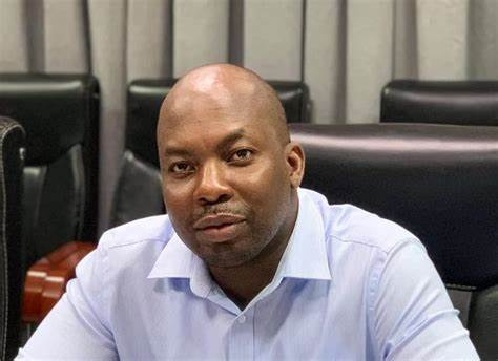





Facebook
Twitter
Pinterest
Instagram
Google+
YouTube
LinkedIn
RSS