
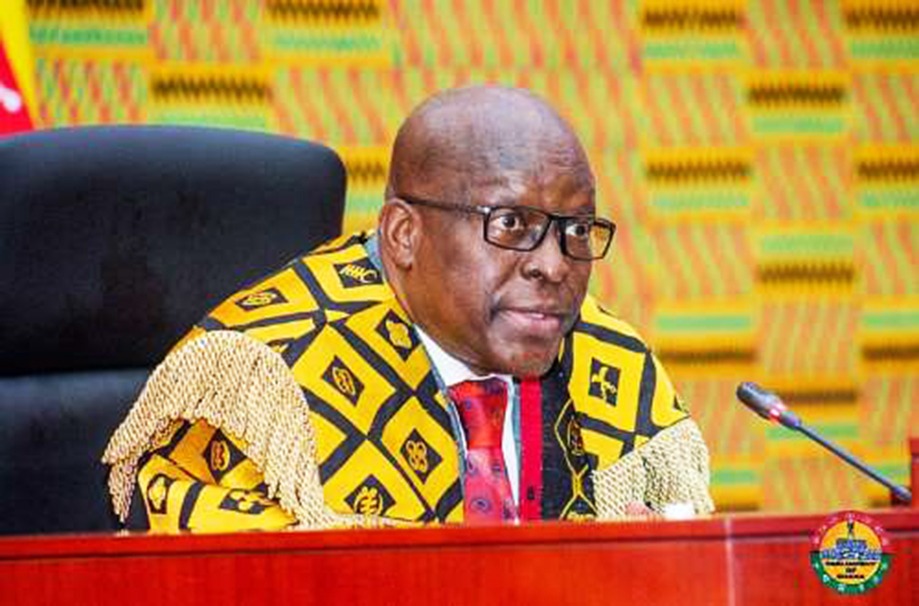

Parliament on Thursday witnessed a heated debate over resource allocation to key state institutions, with Speaker Alban Sumana Kingsford Bagbin warning that the government’s budgeting approach threatens Ghana’s democratic accountability architecture.
Speaking during deliberations on budget estimates for constitutional bodies and oversight institutions, the Speaker cautioned that Parliament risks failing the Ghanaian public if it continues to operate under chronic underfunding.
“The agencies that anchor national programmes, if not well-resourced, cannot change the existing framework,”Speaker Bagbin noted. “Even with good intentions, the laws will trap you. Until we amend the laws, you cannot implement the ideas you have.”
He described the budgetary allocations to Parliament and the Audit Service as“woefully inadequate”, especially as the House prepares to intensify oversight from the national to district assembly level. The Speaker observed that committee work increasingly resembles audit functions due to gaps in institutional capacity.
Bagbin also referenced a budget proposal to establish a new Value-for-Money Audit Department, questioning why government would create an additional auditing unit while existing ones remained under-resourced.
“If we do not realign these projections, we should forget about true democracy. We cannot deceive ourselves,”he said.
OSP Controversy Sparks Heated Exchanges
The debate shifted dramatically when Majority Leader Mahama Ayariga responded to the Speaker’s earlier comments about the Office of the Special Prosecutor (OSP). Ayariga argued that the institution, established in 2017 to combat corruption, had failed to achieve meaningful results.
His comments came a day after the OSP arrested and detained private legal practitioner Martin Kpebu, who had publicly criticized the office’s conduct. Kpebu was later released following public pressure.

Ayariga condemned the arrest and described it as symptomatic of deeper institutional failures.
“The incident raises fundamental questions about the existence of that office,” he said.“Tell me, after close to eight years, what has been the achievement of the OSP?”
He maintained that the creation of the OSP was unconstitutional from the start because it stripped prosecutorial authority from the Attorney General, who is the only constitutionally established prosecutorial office.
“Fighting corruption is not about littering the place with institutions,”Ayariga argued. “It is the political commitment of leadership that fights corruption not the creation of fanciful offices.”
Speaker Urges Non-Partisan Approach to Systemic Problems
Intervening in the debate, Speaker Bagbin cautioned members to approach the matter without political coloration, noting that heavy-handed security practices and institutional overreach predate the current administration.
“This matter is so endemic that it cuts across regimes,”he said. “Let us be honest. This is cultural within our security agencies. When someone is invited, they think the person must be arrested. The law is clear.”
He welcomed calls for a closed-door committee session to address the structural reforms needed to strengthen Ghana’s accountability system.
Call to Abolish the Office of the Special Prosecutor
In a bold proposal, the Majority Leader called for the outright abolition of the OSP.
He referenced former Speaker Prof. Aaron Mike Oquaye, who had recently suggested the use of a private member’s bill to scrap the institution.
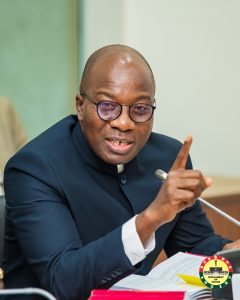
Ayariga emphasized that abolishing the office would not shield anyone from accountability.
“Abolishing the OSP will not let off the hook anyone who has violated the law. I will ensure such cases are even expedited,”he stated.
He argued that corruption investigations should be consolidated under one leadership the Attorney General as provided by the Constitution.
The proliferation of anti-corruption bodies, he said, has led to confusion, duplication, and institutional rivalry.
“Which corruption cases should the OSP handle? Which should the Attorney General handle? Which should the EOCO investigate? Institutions are obstructing each other,”he lamented.
Majority Leader Defends Government’s Record
Defending the current administration, Ayariga insisted that the government had remained scandal-free due to strong political commitment to accountability.
“This government has been in office for about 11 months now. We haven’t reported a single scandal,”he said. “Political corruption is a function of political leadership. If leadership is determined not to be corrupt, they will not be corrupt.”
He concluded by urging Parliament to realign national anti-corruption strategy with constitutional provisions and adequately resource the Attorney General’s Office.
For more news, join The Chronicle Newspaper channel on WhatsApp: https://whatsapp.com/channel/0029VbBSs55E50UqNPvSOm2z
The post OSP MUST BE SCRAPPED – MPs appeared first on The Ghanaian Chronicle.
Read Full Story



Facebook
Twitter
Pinterest
Instagram
Google+
YouTube
LinkedIn
RSS