


By Kingsley Webora TANKEH
Ghana has ranked very low in an Infrastructure Transparency Index (ITI), a global benchmark that reveals deep-seated issues in how public construction projects are awarded and managed, scoring just 35.76 percent.
The ITI, launched by Transparency International Ghana in partnership with CoST Ghana, places the nation below the global average of 50 percent – raising concerns about accountability, citizen inclusion and value for money in Ghana’s infrastructure sector.
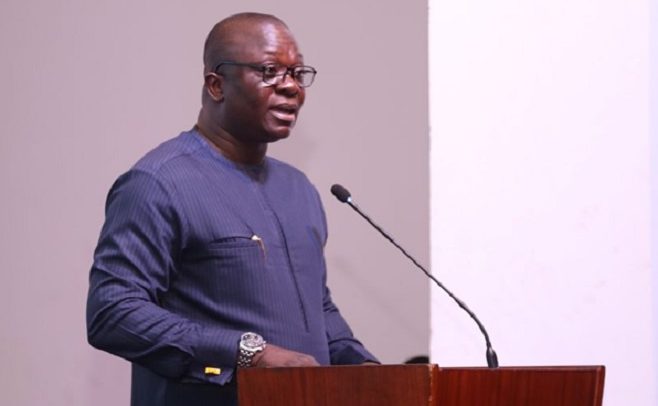
While 2024’s score marks a slight improvement over the 2021 index, Fundraising Manager-Transparency International Ghana Michael Kwame Boadi said though the score marks an improvement “it is not encouraging”, emphasising that the index is a critical tool to strengthen processes in the corruption-plagued sector.
“We keep talking about leaving no one behind. We talk about transparency and accountability. If you are not providing access to data on infrastructure, then you are not being accountable. If you are not including citizens, then you are leaving them behind,” he stated.
The ITI focuses on four key dimensions: quality of the enabling environment, citizen participation, information transparency and management processes. The report shows that among these four, the country faired well in the enabling environment dimension – citing the existence of robust laws governing the sector. However, it attributed the low score to a failure to translate these existing laws into effective, open and compliant action.
“You may have the laws, yet they are not delivering the objectives for which they were set up,” Mr. Boadi explained, pointing to a systemic gap between policy and practice.
The report revealed that the country scored 60.90 percent in enabling environment, 34.14 percent in information disclosure, 26.35 percent in citizen participation and 25.45 percent in capacities and processes.
Responding to the report findings, Minister of State for Public Sector Reforms Lydia Lamisi Akanvariba acknowledged the low ranking but maintained that there is more room for improvement, expressing government’s commitment to transparency.
Ghana’s score was compared with that of Costa Rica, which scored 66.95 percent. Mrs. Akanvariba however set an ambitious target for thegovernment, declaring: “Our target is to overtake and not to go and match ourselves with Costa Rica”.
The minister linked the low score to flawed tender processes, suggesting that cronyism has often trumped transparency. “Not just because people are your friends, your cronies, you must go behind the scenes and give them a contract,” she said, adding that the current Mahama-led government is committed to a more transparency in ensuring effective delivery of infrastructure projects.
“The young Mahama-led administration is going all out for a tendering process instead of sole sourcing,” the minister asserted, signalling a move away from the controversial practice of sole sourcing for contracts that has long been criticised for lacking competition and oversight.
She said this commitment extends to government’s flagship Big Push infrastructure projects, confirming that they will be advertised for open tendering on the Public Procurement Authority (PPA) website.
The minister emphasised the importance of a robust road infrastructure, directly linking roads to economic prosperity. She argued that the current state of the country’s road network is “killing our system”. She painted a picture of the cost this has caused the nation. “Imagine a Chinese man comes to Accra and wants to do mining in Bolgatanga. He needs travel for about 12 to 16 hours. The person will feel it is very difficult.”
The index was first conducted in 2021. However, after a three-year hiatus the second one was conducted in 2024. It will henceforth be conducted bi-annually, with the next one scheduled for 2026.
The post Infrastructure Transparency score of 35.76 ‘not encouraging’ appeared first on The Business & Financial Times.
Read Full Story









Facebook
Twitter
Pinterest
Instagram
Google+
YouTube
LinkedIn
RSS