


By Wisdom JONNY-NUEKPE
The Ghana Employers’ Association (GEA), and the Confederation of Norwegian Enterprise (NHO) have hosted the 2nd edition of the Association’s Annual Occupational Safety and Health (OSH) Conference to promote workplace safety.
The event, which was themed, ‘’Future-Ready Workplace: Advancing Safety, Well-Being and Productivity in a Transforming World of Work’’, marked a significant milestone in the ongoing efforts of GEA, to ensure sustainable enterprise development and safeguard the well-being of workers across the country.
Speaking on behalf of GEA President Nana Dr Emmanuel Adu-Sarkodee Afriyie, Joseph Kingsley Amuah, the Association’s Director of Industrial Relations, said the theme reflects the profound transformation which is shaping labour markets globally and nationally.
He opined that the rapid growth of technology, the emergence of new forms of work and the restructuring of enterprise models have created both opportunities and complex risks.
Mr Amuah explained that frequent workplace accidents, fires, injuries and occupational illnesses continue to affect workers and impose substantial financial and operational costs on businesses, undermining productivity and diverting resources from innovation and growth.
These developments, according to him, heighten the need for efficient regulatory systems, proactive risks management and holistic approaches to occupational safety and health.
“It is in this context that the GEA institutionalized this conference, to deepen national dialogue on occupational safety and health – creating a platform where business leaders, trade unions, policy makers and OSH experts can reflect on emerging trends, exchange knowledge and identify practical strategies to enhance workplace safety.”
Secretary-General of the Trades Union Congress (TUC), Joshua Ansah, noted that the conference’s theme is timely, considering that the world of work is changing at a speed that demands new thinking and a renewed dedication to safeguarding the people who keep the economy and enterprises running.
He said, the future of work is not a theoretical discussion, but a lived reality of the factory worker adjusting to new technologies, the office worker navigating rising stress levels, the driver facing unpredictable risks, and the teacher dealing with psychosocial pressures.
“Their safety, health and dignity must remain at the centre of every conversation on productivity and enterprise competitiveness” Mr Ansah indicated.
He said Organised Labour only considers a workplace as future ready, when its people are protected, respected, and meaningfully involved in decisions that affect their well-being.
Mr Ansah emphasized the position of Organized Labour and the TUC as ready to work with GEA, to deepen collaboration in building safer, healthier and more resilient workplaces.
A speech delivered on behalf of the Chief Fire Officer, by DO1, Michael Ato Korsah – Deputy Director, Safety Education at the Ghana National Fire Service, admonished workplaces to embed safety into every business process at the workplace.
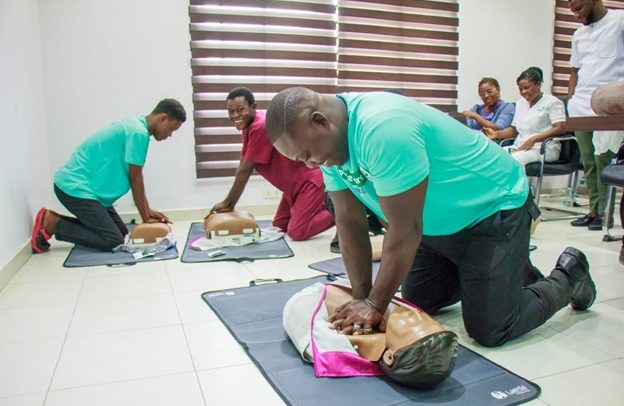
He said, regular joint workshops through collaboration with the Fire Service to hold drill sessions and feedback mechanisms are key and practical ways to sustain the dialogue on safety.
“Adoption of technology also accelerates capabilities, as drones could be used for aerial assessments, IoT-enabled wearables for real-time health monitoring, and AI-driven analytics for predictive hazard detection are no longer futuristic concepts but present-day tools” he said.
The event featured three interconnected sessions; strengthening labour market regulation and enforcement, integrating environmental and social sustainability into OSH systems; and a panel discussion on building safety-centred workplace cultures that translate policy into meaningful behavioural change and productivity gains.
The initiative aligns with the International Labour Organisation’s 2022 global recognition of safe and healthy working environments as a fundamental right.
The post Employers’ Association advocates workplace safety appeared first on The Business & Financial Times.
Read Full Story






Facebook
Twitter
Pinterest
Instagram
Google+
YouTube
LinkedIn
RSS