


By Joshua Worlasi AMLANU
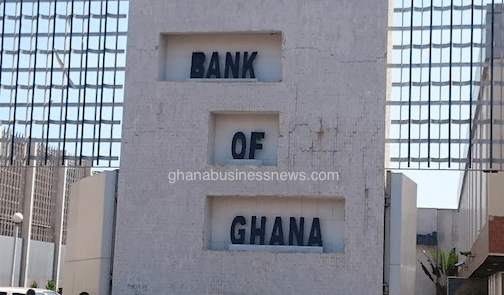
The money market recorded a sharp rebound in demand following the Bank of Ghana’s 350-basis-point policy rate cut to 18 percent, with investors driving down Treasury bill yields and significantly overshooting government’s funding target at the latest auction.
At last Friday’s tender, government raised GH¢5.78billion, more than double its GH¢2.86billion target. Yields on the 91-, 182- and 364-day bills fell by an average of 10 basis points as the rate cut filtered quickly into short-term funding costs. For this week’s auction, the Treasury aims to raise GH¢5.81billion – suggesting continued reliance on short-term securities to meet near-term financing needs.
This follows several weeks of undersubscriptions on the money market.
Fincap Securities in an investor note said the oversubscription signals a strong liquidity response to the Bank of Ghana’s aggressive easing move. “The recent cut fed through to money markets,” the firm noted, adding that investors had rotated into government bills as yields adjusted lower.
The rate cut, announced following the Bank’s 127th Monetary Policy Committee meeting, marked a continuation of the easing cycle that has brought cumulative cuts this year to 1,000 basis points. The central bank cited improved inflation dynamics, a stable currency and stronger economic indicators as justification for the decision.
Governor Dr. Johnson Pandit Asiama said the committee viewed the recent disinflation progress as “very much in line with the disinflation programme”, adding that headline inflation has eased to the Bank’s 8 percent central target for the first time since 2021.
Despite the strong auction performance, Treasury bill trading in the secondary market weakened, dropping 33.77 percent to GH¢1.84billion as investors appeared to hold positions rather than rotate out. Activity in old bonds slipped by 8.54 percent.

Curve dynamics also shifted following the rate cut. Constant Capital said Thursday’s market remained anchored at the front end where demand for 2027–2029 bonds remained strong, with Feb 2027s and Feb 2028s trading between 14.50 percent and 14.70 percent. The firm reported pockets of interest further out the curve, including trading in 2038s at around 16 percent, signalling a gradual return of confidence in longer maturities.
Constant Capital noted that momentum is likely to persist in coming sessions, supported by the accommodative policy stance and sustained bidding across short- to mid-tenor bonds. “Investors are repositioning for a lower-rate environment,” the brokerage said.
Analysts at Apakan Securities said the rate cut aligns with their expectations and reflects an improving macro backdrop. The firm said inflation is likely to remain within the Bank’s 8 percent ± 2 percent target band through year-end, providing scope for additional easing in 2026 if current trends persist.
“Given the continued easing of price pressures, we anticipate room for further cuts barring adverse shocks,” Apakan said.
The Bank of Ghana reinforced its policy shift with an operational adjustment, announcing a return to the 14-day bill as its primary open market instrument.
Dr. Asiama said the move represents a reset to “where we are supposed to be operating”, arguing that shorter instruments will enhance liquidity management and strengthen monetary policy transmission.
The post Treasury demand rebounds, yields fall post-policy rate cut appeared first on The Business & Financial Times.
Read Full Story















Facebook
Twitter
Pinterest
Instagram
Google+
YouTube
LinkedIn
RSS