


PARLIAMENT on Friday passed two separate bills aimed at addressing the issue associated with obtaining a charter by tertiary institutions and the payment of mining levies in the mining sector of the country by mining companies.
The bills are the Education Regulatory Bodies (Amendment) Bill, 2025 and the Growth and Sustainability (Amendment) Bill, 2026.
The Education Regulatory Bodies (Amendment) Bill seeks to make optional the six-year requirement for affiliated tertiary institutions to obtain a charter.
The Growth and Sustainability (Amendment) Bill, on the other hand, reduces the mining levy paid by mining companies from three per cent to one per cent, following the introduction of the Minerals and Mining Royalties Act, which includes a sliding-scale mechanism.
Both bills were passed after going through the necessary legislative processes, including the first, second and third readings, consideration stage, debate and adoption of committee reports.
Presenting the explanatory memorandum on the Education Regulatory Bodies (Amendment) Bill, the Minister of Education, Mr Haruna Iddrisu, said the government recognised the contribution of private tertiary institutions to the delivery of quality education in the country.
He said compelling such institutions to obtain a charter under the current GTEC Act 1023 could lead to their collapse.
“Mr Speaker, that probably can even increase our current unemployment situation and become a disincentive for Ghanaians who want to contribute to the development of the country by investing in the provision of quality tertiary education at the private level,” Mr Iddrisu said.
He added that policy approval of programmes that had previously been reserved for publicly chartered institutions would now be extended to private institutions to ensure their programmes aligned with government policy objectives.
“Mr Speaker, we sought cabinet approval for the Education Regulatory Bodies (Amendment) Bill to be presented to Parliament to make charter optional. I so submit and urge honourable colleagues to support this amendment so that we can safeguard the investment that many other Ghanaians have made in the provision of tertiary education by way of private universities and investment in them,” he said.
Touching on the Growth and Sustainability (Amendment) Bill, the Deputy Minister of Finance, Mr Thomas Nyarko Ampem, explained that the mining levy was initially increased from one per cent to three per cent to ensure the country benefited from the profits of mining companies, as Ghana did not have a windfall tax in place.
However, he said with the introduction of a sliding-scale mechanism under the Minerals and Mining Royalties Act, which was laid before Parliament last year and matured on Friday, there was no need to maintain the levy at three per cent.
Mr Nyarko Ampem stressed that the reduction was not intended to favour mining companies but to enable the country to maximise benefits from its natural resources.
“Mr Speaker, this arrangement will make it fair to mining companies and also to Ghanaians who are the owners of these natural resources as a result of the sliding scale mechanism,” he added.
Meanwhile, the Minority Leader, Mr Alexander Kwamena Afenyo-Markin, during the consideration stage, raised concerns about the bill and urged the House to delay its third reading for further scrutiny.
According to him, although the rationale behind the bill appeared sound, the sliding-scale royalty mechanism could discourage investors from entering the mining sector.
“Mr Speaker, the point is that if you are saying that you are even reducing taxes but, if this upscale royalty is very high, what you are doing by way of relief is of no effect and becomes otiose, and the investors will still go because they don’t find this incentive sufficient enough to keep them here,” he argued.
BY BENJAMIN ARCTON TETTEY
Follow our WhatsApp Channel now! https://whatsapp.com/channel/0029VbAjG7g3gvWajUAEX12Q
The post Parliament passes bills on University charters, Mining levy reduction appeared first on Ghanaian Times.
Read Full Story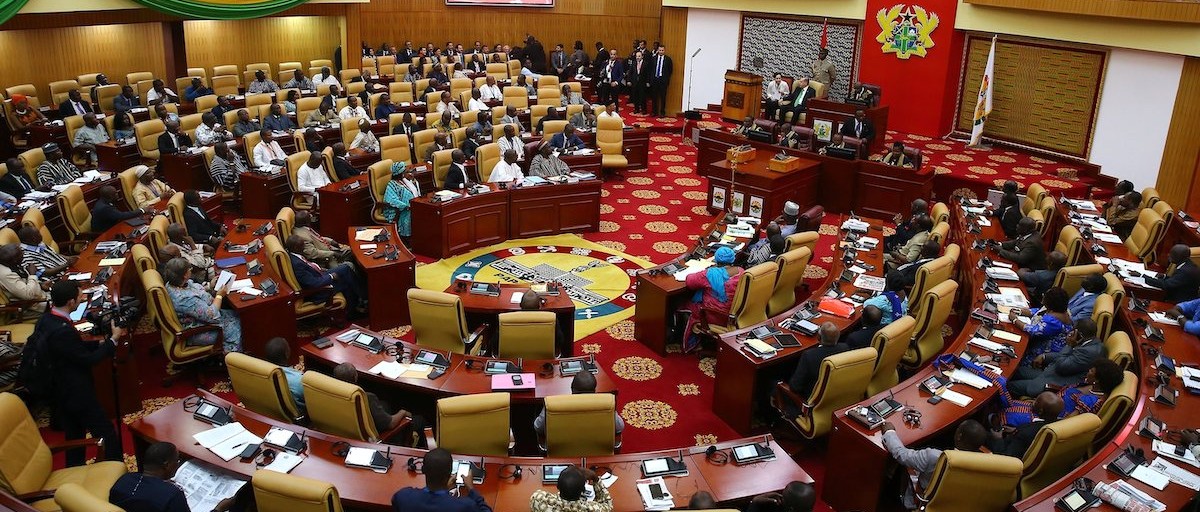



Facebook
Twitter
Pinterest
Instagram
Google+
YouTube
LinkedIn
RSS